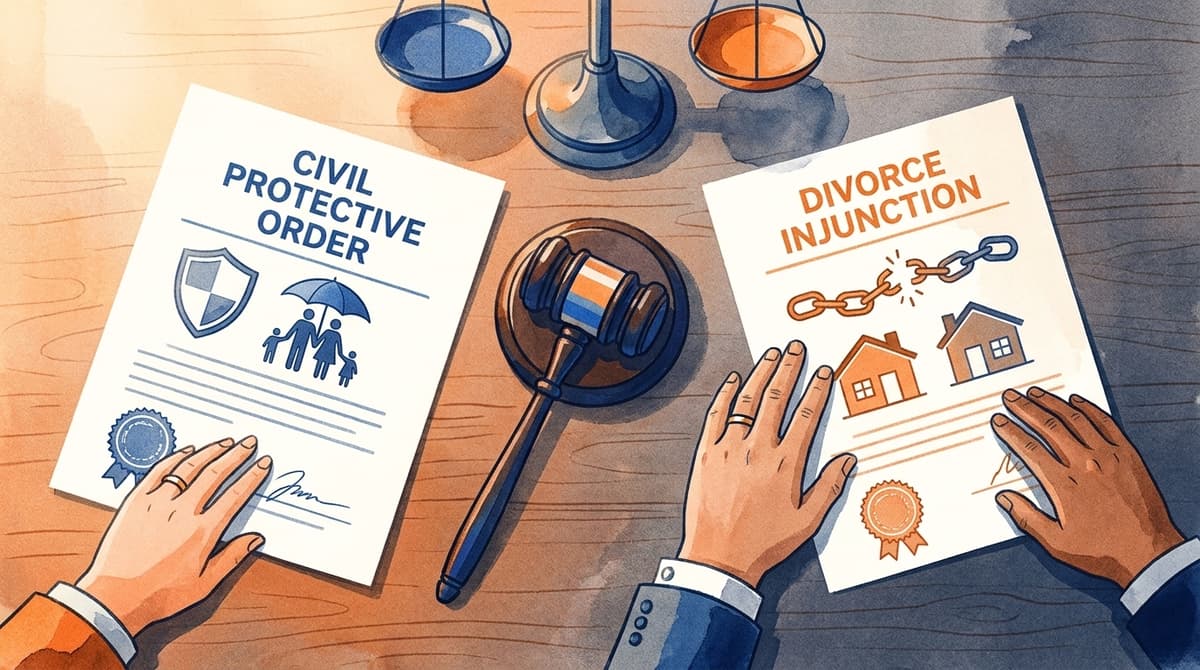










When Safety Becomes the Priority
Some legal questions can wait. This one usually can't. If you're searching for information about protective orders in Utah, something has likely happened, or is happening, that has made your home or daily life feel unsafe. Before anything else: if you're in immediate danger, call 911.
For situations that aren't an active emergency but still require legal protection, a protective order may be exactly the right tool. This post explains what Utah protective orders actually are, who qualifies, and how the process works.
What a Protective Order Does
A protective order is a civil court order that legally prohibits an abusive person from contacting, approaching, or harming you. In Utah, protective orders are governed by Utah Code Title 78B, Chapter 7, which covers both domestic violence and cohabitant abuse situations.
Depending on your circumstances, a protective order can require the restrained person to stay away from your home, workplace, and your children's school. It can prohibit all contact, including phone calls and texts. It can also grant you temporary custody of minor children and require the other party to leave a shared residence.
These aren't suggestions. Violating a protective order in Utah is a Class A misdemeanor under Utah Code § 76-5-108. Repeated violations or violations involving physical harm can result in felony charges.
Who Can Get One
Utah law distinguishes between different types of relationships. A cohabitant abuse protective order applies when the people involved are or were married, live together, share a child, or are in a dating relationship. This is the most common type in family law contexts.
A civil stalking injunction is available even when there's no cohabitant relationship. If a neighbor, coworker, or acquaintance is stalking or harassing you, there's still a legal path to protection.
Children can also be protected. If your child is being abused or is at risk, you can petition for a protective order on their behalf.
How the Process Works
Step One: The Ex Parte Temporary Protective Order
You don't need the other person present, or even notified, to get initial protection. You can file a petition with the district court in the county where you live, where the abuse occurred, or where the respondent lives. A judge reviews it, often the same day, and can issue an ex parte temporary protective order right away if the facts support it.
"Ex parte" means the judge heard only one side. That's intentional. When safety is at stake, the law allows courts to act quickly without waiting for the other party to respond. This temporary order typically stays in place for about 20 days until a full hearing is scheduled.
For more on how temporary orders work in family law, see our post on Utah Temporary Orders and our Family Law Friday – Temporary Orders overview.
Step Two: The Full Hearing
Both parties appear before a judge. The respondent can contest the order. You'll have the chance to present your evidence, which might include photos, medical records, screenshots of messages, witness statements, or a police report.
If the judge finds sufficient evidence of abuse or the threat of abuse, a permanent protective order is issued. In Utah, a permanent protective order has no automatic expiration date. It stays in effect until a court modifies or dismisses it.
Where to File
You can file at any Utah district courthouse. Many courthouses have self-help centers where staff can assist with paperwork, though they can't give legal advice. The Utah Courts website also provides petition forms online. There's no filing fee for protective order petitions in Utah.
Law enforcement can also connect you with resources. The Utah Domestic Violence Coalition maintains a 24-hour hotline at 1-800-897-LINK (5465) and can help you find local shelter, advocacy, and legal assistance.
When Children Are Involved
A protective order can include provisions for your children, such as temporary custody and limits on the other parent's contact or visitation. These arrangements are temporary. Once a protective order is in place, custody and parent-time questions will likely need to be resolved through a formal family law proceeding.
If you're already in a divorce or custody case, a protective order can affect those proceedings in significant ways. An attorney can help you understand how everything fits together before you're caught off guard. Our protective orders page has more detail on how JR Law Group handles these cases.
Do You Need an Attorney
You can file for a protective order without a lawyer. Utah's court system makes that possible. But having an attorney matters when the other party contests the order, when children are involved, or when the situation is likely to lead to divorce or custody proceedings.
The full hearing is a real legal proceeding. Evidence rules apply. Preparation matters. An attorney can help you present your case clearly and anticipate what the other side may argue.
Talk to Someone Before You Decide
If you're trying to figure out whether a protective order fits your situation, or what to do after one has been filed against you, JR Law Group offers a free consultation. No pressure, no obligation. Just a conversation about your options.
Schedule your free consultation with JR Law Group today.