








A woman in Millcreek had already called a domestic violence hotline, documented two incidents on her phone, and told her sister she was ready to do something about it. When she finally walked into a courthouse to ask for help, the clerk asked whether she wanted a "protective order" or a "restraining order." She assumed they were the same thing. They are not, and the distinction changed what she qualified for, how fast she could get it, and what it would actually require of the person she was trying to keep away from her.
That confusion is not rare. People search for "restraining order Utah" constantly, and many of them have a genuine safety concern, a custody dispute, or a divorce proceeding in front of them. What they find is a patchwork of general information that doesn't always map to how Utah courts actually handle these matters. This article lays out the real framework, in plain terms.
Why "Restraining Order" Isn't a Utah Legal Term
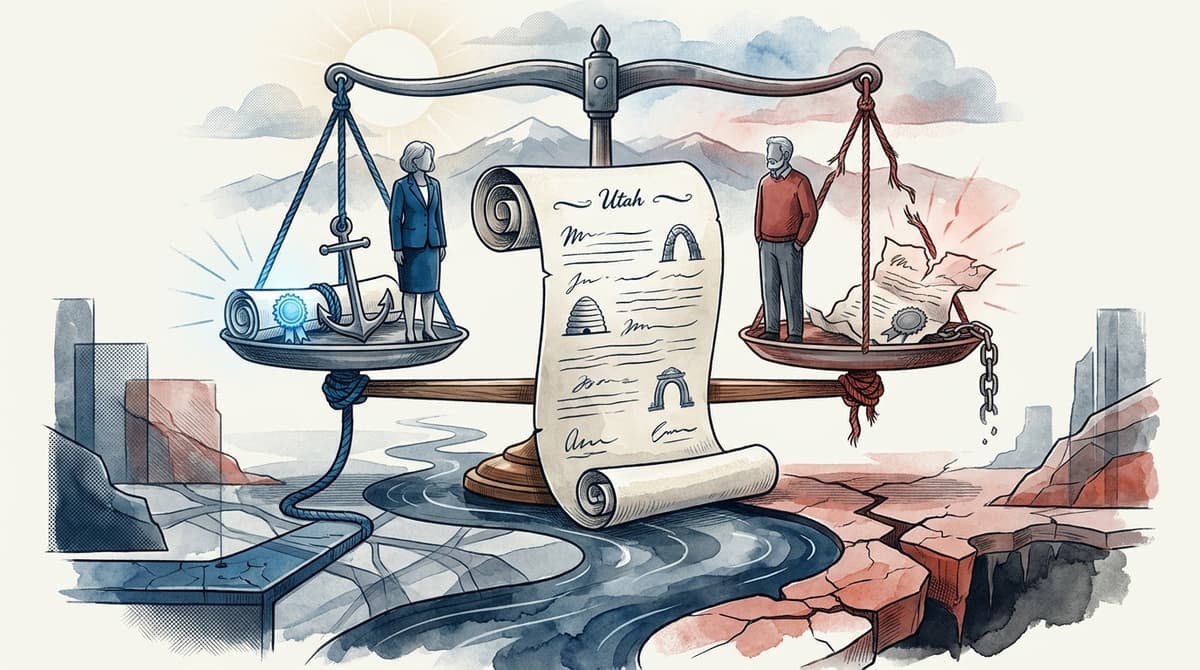
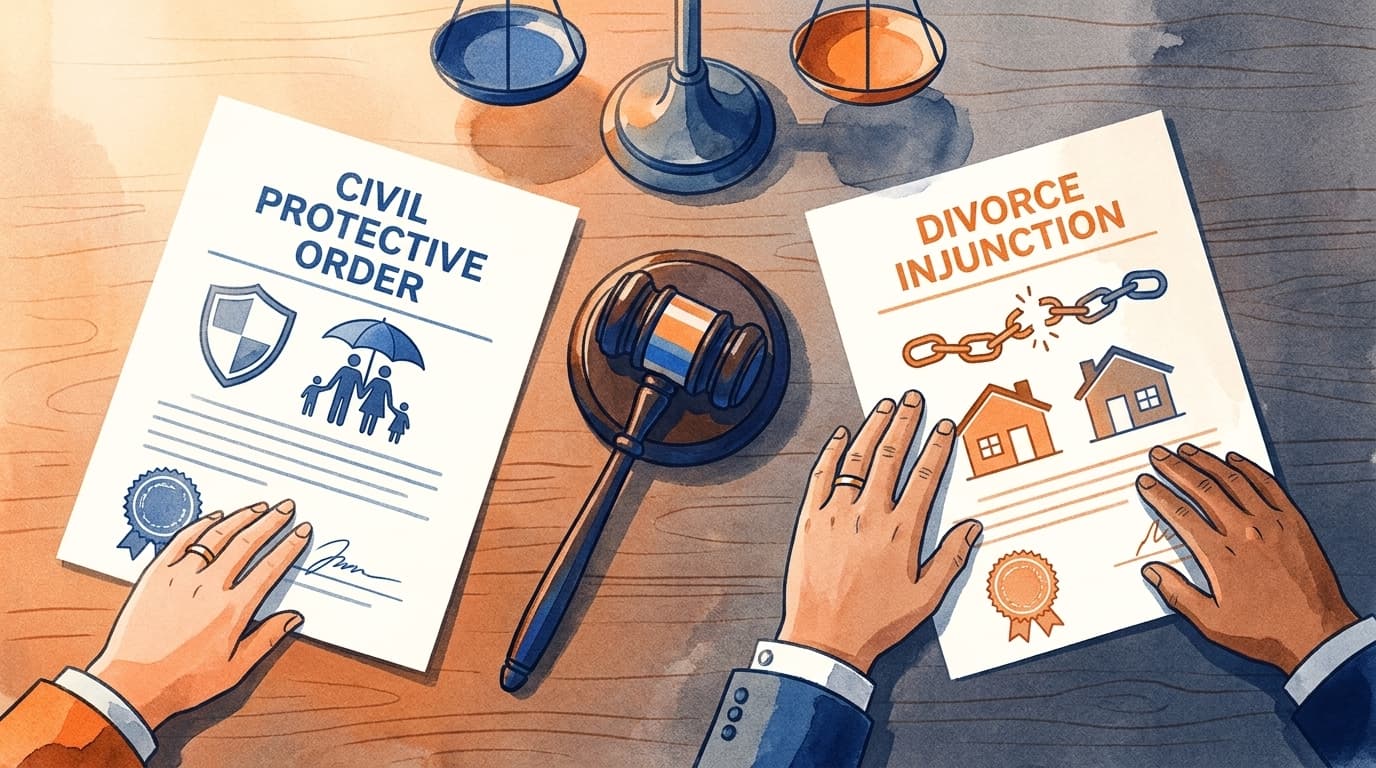
In many states, a restraining order is a standalone legal document that a court issues to restrict one person's contact with another. Utah courts do not use that term in the same way. Utah law creates two distinct tools that people typically mean when they say "restraining order": a protective order under Utah Code Title 78B, Chapter 7, and a domestic injunction (sometimes called a standing order or automatic order) that takes effect when a divorce case is filed. Each one serves a different purpose, applies in different circumstances, and is obtained through a different process.
Understanding which tool applies to your situation is not just a semantic question. Filing for the wrong type of relief can delay protection you need or create procedural complications in a divorce case already underway. The terminology matters because the law behind it matters.
What a Protective Order Actually Does
A protective order in Utah is a civil court order that prohibits a person (the respondent) from contacting, approaching, or harming another person (the petitioner). Utah Code Section 78B-7-102 governs who qualifies. The petitioner must show they have experienced domestic violence, harassment, stalking, or sexual abuse, and that the respondent is a cohabitant, family member, or someone they have had a sexual or dating relationship with.
There are two phases. First, a judge can issue an ex parte temporary protective order without the respondent present, often the same day or within 24 hours, if the petitioner demonstrates immediate danger. Second, a full hearing is scheduled, typically within 20 days, where both sides can appear and the court decides whether to issue a longer-term order. A permanent protective order can remain in effect for up to three years and is renewable.
Protective orders can also include provisions about children. A court may restrict the respondent's contact with minor children, establish temporary parenting arrangements, and address other immediate family safety concerns as part of the same order.
Who Can File
Anyone who has experienced domestic violence or abuse from a cohabitant or qualifying relationship can petition for a protective order. You do not need to be married to the respondent. Dating partners, former spouses, and people who share a child together all qualify. Protective orders are filed through the district court in the county where you live, where the respondent lives, or where the abuse occurred.
What Happens After It's Issued
Once the temporary order is in place, a constable or law enforcement officer serves it on the respondent. That service is what makes the order enforceable. Until the respondent has been formally served, the order exists on paper but law enforcement cannot act on it. The hearing that follows gives the respondent an opportunity to contest the order, though courts take petitioner safety seriously throughout that process.
Automatic Orders in Divorce: The Other Kind of Injunction
When a divorce case is filed in Utah, automatic standing orders go into effect immediately upon filing under Utah Code Rule 4-903. These orders apply to both spouses automatically, without any separate petition, and they cover financial conduct rather than physical safety. They prohibit either spouse from selling marital assets, emptying accounts, canceling insurance policies, or removing children from the state without the other spouse's consent or a court order.
These are sometimes casually called "restraining orders" because they restrain conduct, but they are not protective orders and they are not designed to address safety concerns. If you are in a divorce and you also have a genuine safety concern, you may need both: the automatic standing order that protects your financial interests and a separate protective order that addresses personal safety.
Protective Order
Filed independently through the district court. Requires showing domestic violence, stalking, or harassment from a qualifying relationship. Available whether or not a divorce is pending. Enforceable by law enforcement. Can restrict contact, proximity, and access to children. Temporary order available within 24 hours in urgent cases.
Automatic Standing Order (Divorce)
Takes effect automatically when a divorce petition is filed. Applies to both parties. Governs financial conduct and out-of-state travel with children. Does not address physical safety or contact between spouses. Not enforced by law enforcement in the same way. Enforced through the divorce court via contempt or order to show cause.
The practical implication: if your spouse has threatened you or made you fear for your safety, filing for divorce does not automatically protect you from contact. You would need to file a separate petition for a protective order through the district court to obtain that protection. The standing order from the divorce case handles your finances and property; it does not keep an unsafe person away from you.
When You're Not Sure Which One You Need
The most common situation where this question comes up is a divorce where the marriage also involved abuse, harassment, or behavior that made one spouse feel genuinely unsafe. These cases often need both tracks running at the same time: an attorney managing the divorce proceedings, including temporary orders for custody and financial matters, and a protective order filed or in place to address immediate personal safety.
A second common situation involves people who are not in a romantic or cohabitant relationship with the person causing harm. If a neighbor, a coworker, or an acquaintance is stalking or harassing you, a protective order may still be available under Utah's stalking statute (Utah Code Section 76-5-106.5), which does not require a cohabitant relationship. The legal threshold is different, but the process through the district court is similar.
A third situation is one where the safety concern has passed but the ongoing behavior, repeated unwanted contact, showing up at the home or workplace, monitoring activity, is still causing real harm. Utah courts can issue protective orders for harassment and stalking even when physical violence has not occurred. Documentation of the behavior, saved messages, records of incidents, witness accounts, strengthens any petition significantly.
What Happens in a Custody Case
If a protective order is issued while a child custody matter is active, it can directly affect the custody outcome. Utah courts consider domestic violence as a relevant factor when determining parenting arrangements. A protective order does not automatically determine custody, but it is part of the record a court reviews. If both a protective order proceeding and a custody case are running at the same time, an attorney can help coordinate those two tracks carefully so each one informs the other.
Post-decree parents in modification proceedings face similar questions. If circumstances have changed and a former spouse's behavior has become threatening or harassing since the original decree, a protective order filed after divorce is just as available as one filed during the marriage. The right to seek protection does not expire when the divorce does. Learn more about what grounds are required in our detailed post on modifying a child custody order in Utah.
How JR Law Group Approaches These Matters
JR Law Group handles only family law, which means the attorneys here regularly see protective order matters alongside active divorce or custody cases, not as separate, unrelated events. When a client comes in facing both a safety concern and a pending family law matter, the attorneys can address how the two proceedings interact, what to file, in what order, and what the record in each case means for the other. Clients frequently note that their attorney took time to understand their specific circumstances before recommending a course of action, and in these situations that groundwork shapes both the short-term protection obtained and the longer-term outcome of the family law case.
Taking the Next Step
If you are trying to work out which type of order fits your situation, whether that is a protective order filed on its own, an order connected to a divorce, or a question about how an existing order interacts with a custody case, a consultation with an attorney who handles only family law is the most direct way to get a clear answer. The specific facts of your relationship, the county you are in, and whether other proceedings are already filed all shape which path makes sense. JR Law Group serves clients across Salt Lake, Utah, Davis, Wasatch, and Summit counties. Your first conversation is exactly that, a conversation, not a commitment. Reach out here to schedule a time to talk.